

About six months after starting my coaching practice, I ran into a former mentor of mine. We got to talking, and I realized pretty quickly that she didn’t quite understand what kind of business I’d started.
She thought I was a fitness coach.
I can understand the confusion. If you follow my personal social media pages, you’ve probably seen plenty of posts about my time in the gym. But here’s the thing: fitness coaching and business coaching have more in common than you might think.
After 35 years in the gym, I’ve learned that success rarely comes from one big decision or a sudden transformation. It comes from discipline, consistency, and small choices made every single day. The same is true for leadership.
Why Consistency in Leadership Matters
Think about what happens when you start going to the gym. You don’t walk in, lift weights once, and expect to see a dramatic difference the next morning. You show up. You practice. You make adjustments. You come back and do it again. Over time, those small improvements add up.
Consistency in leadership works the same way.
You don’t become a better leader because you attended one workshop, read one book, or had one great conversation with your team. You become a better leader through the decisions you make and the behaviors you repeat.
Your leadership is reflected in how you communicate, respond when something goes wrong, listen to your employees, and follow through on your commitments. Those daily choices shape the kind of leader you become and the kind of business you’re building. Your business is the result of the choices you make and the ones you avoid.
Small Improvements Create Big Changes
One of the biggest mistakes leaders make is believing that improving their business requires some dramatic change, whether that’s a new strategy, a complete restructuring, or a different management approach. Sometimes those things are necessary, but often, the greatest opportunities are much smaller.
Maybe you need to listen a little more carefully during your next team meeting, communicate expectations more clearly, or give someone on your team more room to decide without stepping in.
None of those changes sounds particularly impressive on its own. However, imagine making those small improvements consistently for six months or even a year. That’s where meaningful progress happens.
The same principle applies in the gym. Better form, better technique, and small adjustments to your routine eventually produce results.
Discipline Is More Than Showing Up
Consistency requires discipline. And discipline isn’t just about doing something when you feel motivated. It’s about following through when you don’t. In business, that’s not always easy. You’ve got customers to take care of, employees who need your attention, problems to solve, and decisions that can’t wait.
It’s easy to get so caught up in running the business that you stop paying attention to how you’re leading it. But leadership development can’t be something you only think about when you have extra time.
Let’s face it, when was the last time you had extra time?
If you want to become a better leader, you have to make it part of how you operate every day. That doesn’t mean adding another two-hour meeting to your calendar. It means being intentional about the opportunities you already have. The next conversation, next decision, next opportunity to help someone on your team grow.
The same discipline applies to planning. In my article on developing a business plan, I explain why following through on specific, measurable goals matters more than simply creating the plan.
Better Leadership Starts With Better Form
When you’re working out, good form matters. You can put in a tremendous amount of effort, but if your technique is poor, you’re not getting the most out of that effort.
Leadership isn’t much different. You can work long hours, attend every meeting, and make every decision yourself. That doesn’t necessarily make you an effective leader. Sometimes, you need someone to help you recognize where a small adjustment could make a big difference.
Maybe it’s how you’re communicating with your team, how you’re approaching a difficult conversation, or it’s recognizing that someone else is capable of taking on a responsibility you’ve been holding onto. That’s a big part of what I do as a business coach.
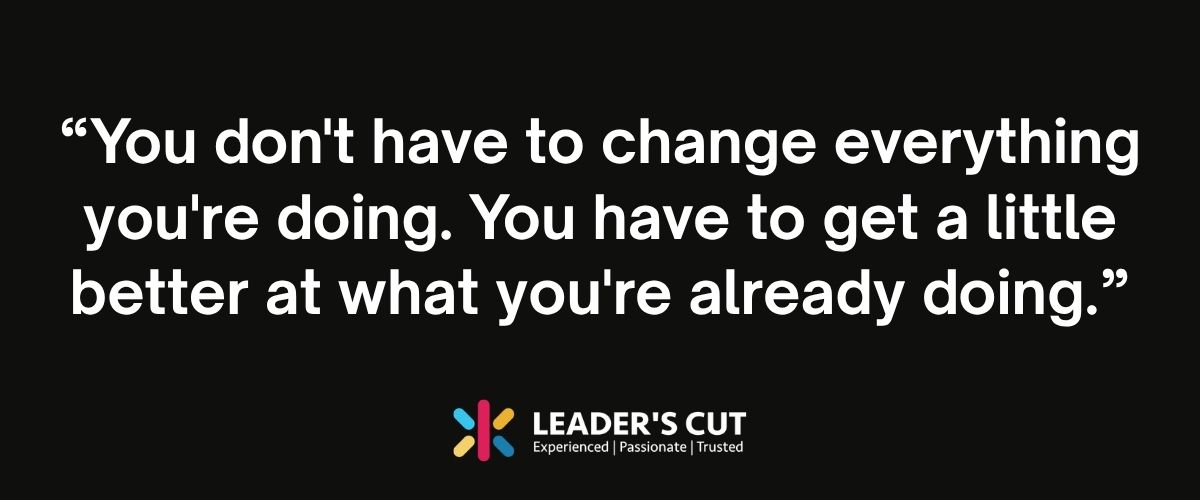
I’m not here to tell people everything they’re doing wrong. I’m here to help them do what they’re already doing, a little bit better, according to their abilities, their strengths, and what they’re trying to accomplish.
That’s also why understanding how to leverage your leadership style is so important. You don’t need to become someone else to be an effective leader. You need to understand your strengths and continue developing them.
Consistency Doesn’t Mean Doing Everything the Same Way
There’s an important distinction between being consistent and refusing to change. Consistency in leadership doesn’t mean using the same approach with every employee or making every decision the same way.
Different people have different strengths. Different situations require different responses. As your business grows, your leadership needs to grow with it.
What does remain consistent is your commitment to learning, improving, and helping the people around you succeed.
Sometimes that means changing how you communicate, stepping back to give someone else the opportunity to lead, or recognizing that the approach that got you here isn’t necessarily the one that will get you where you want to go.
You Don’t Have to Figure Everything Out Yourself
One of the things I value most about coaching is the opportunity to work with different leaders facing different challenges. I get to hear what’s working, what isn’t, and how people are approaching problems in their businesses. I get to bring some of that wisdom into conversations with other clients, because no leader has all the answers.
Sometimes the most valuable insight comes from someone who’s already worked through a challenge you’re facing. That’s another reason consistency matters.
When you regularly make time to reflect, learn, and improve, you create opportunities to benefit from experiences beyond your own.
That includes being willing to hear what your own team has to say. Developing a culture of feedback gives leaders the opportunity to learn from the people around them and make meaningful improvements.
Want to Become a Better Leader? Start Small.
You don’t need to completely reinvent yourself to become a better leader. Start by paying attention to what you’re already doing.
Where could you communicate a little better? Where could you give someone more responsibility? Where could you make a small change that would improve how your team works together?
Choose something. Work on it. Then do it again tomorrow.
Because consistency in leadership isn’t about being perfect. It’s about getting a little better every day.
After 35 years in the gym, that’s one lesson I keep coming back to. And it’s one that translates pretty well into business.
If you’re ready to take a closer look at how you’re leading and where small changes could make a meaningful difference, schedule a coaching conversation.
Check Out More Articles From Our Blog
 What is Business Performance Management? - Efficient business performance management systems are critical to business success. Still, businesses of all sizes struggle to implement them, leading to disjointed divisions and ineffective…

 Ken’s 3 Quick Tips To Improve Problem Solving In Business - When working with a new client, I often observe that the executive/owner/leader believes that they and their teams are problem solvers. When we dig a…