

Promote from within or hire somebody new?
It’s a pretty common question in business. And the answer has a lot to do with what kind of leader you’ve been in the first place. If you’re struggling to find someone on your team who’s ready for the next opportunity, I have a question for you: What have you been doing to prepare them?
Have you been developing your employees? Helping them learn and grow? Having conversations about what they want their careers to look like? If you don’t have anyone to promote from within, that’s not necessarily a hiring problem. It might be a leadership problem.
Promoting From Within Starts Long Before There’s an Opening
One of the biggest mistakes leaders make is waiting until a position opens up to start thinking about who might fill it. Someone leaves. Someone gets promoted. Your business grows, and suddenly you need another manager. Now you’re looking around your team, wondering who’s ready to take on more responsibility.
But developing employees doesn’t happen overnight. Just because someone has been with your company for years doesn’t automatically mean they’re prepared to lead.
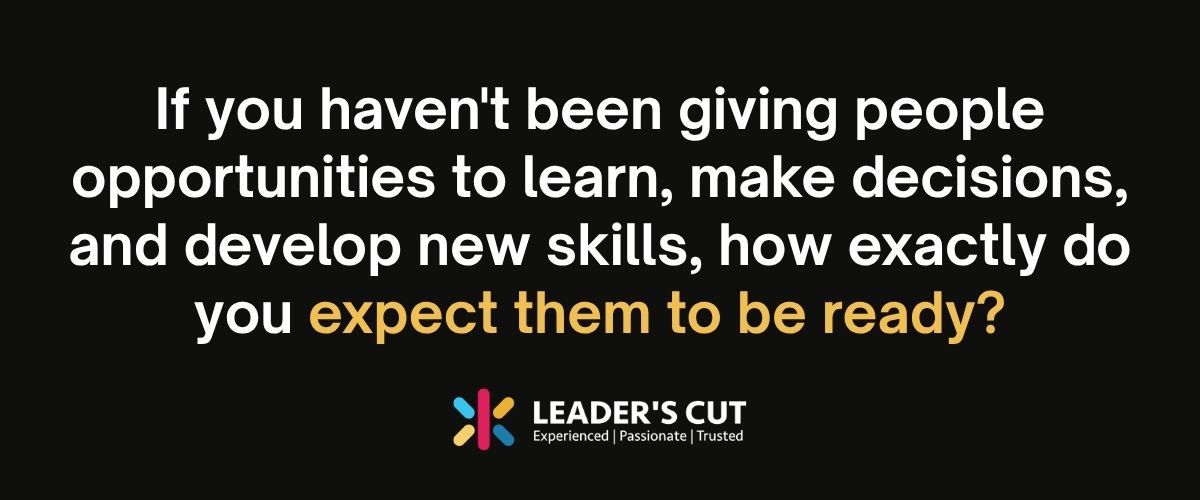
Promoting from within is the result of consistent employee development, not a last-minute hiring decision.
Employee Development Is Part of Your Job as a Leader
When was the last time you had a conversation with someone on your team about their future? Not about their performance this week or whether they completed their assignments, but about what they actually want to accomplish.
Where do they see themselves in a few years? What are they interested in learning? What responsibilities would they like to take on?
Those conversations matter because you can’t help someone grow if you don’t understand where they want to go.
And not everyone wants the same thing. Some employees want to move into management. Others want to become exceptionally good at the work they’re already doing. Some may have strengths you haven’t even recognized yet.
Your job as a leader is to understand those differences and create opportunities for people to develop.
That means giving people meaningful responsibilities, offering feedback, and allowing them to learn from experience.
It also means recognizing that different leadership styles and strengths influence how people work and grow.
You Can’t Develop Leaders If You Make Every Decision
Here’s another problem I see in businesses: leaders say they want employees who take initiative, solve problems, and demonstrate leadership potential. But then they make every important decision themselves.
They step in when something gets difficult. They take over when someone approaches a problem differently. They hold onto responsibilities because it’s faster to do the work themselves.
And then they wonder why nobody on their team is ready for more responsibility. Well, how would they be?
If you’re constantly making decisions for your employees, you’re not allowing them to develop the judgment and confidence they’ll need in a leadership role.
That doesn’t mean handing someone a major responsibility without preparation. It means creating opportunities to practice, make mistakes, receive feedback, and improve.
Start with smaller decisions. Give people ownership of projects. Let them work through challenges without immediately providing the answer.
Developing leaders requires more than teaching them what to do. It requires giving them the opportunity to lead.
Employee Retention Is a Reflection of Your Culture
Let’s talk about retention. You can’t promote employees from within if you can’t keep them around long enough to grow. Retention has a lot to do with the culture you’ve created.
Do people feel valued? Do they understand how their work contributes to the business? Do they see opportunities to grow? Or do they feel like they’re doing the same work every day without any real opportunity to move forward?
Compensation, benefits, and outside opportunities all play a role in employee retention. But leadership plays a significant role in the experience people have at work.
When employees feel supported, trusted, and invested in, you’re creating an environment where they have reasons to stay and grow. And when people stay and grow, you’re building a stronger foundation for future leadership. Retention is about culture. And culture is about who you are as a leader.
Feedback and Career Conversations Can’t Be Once a Year
Developing employees requires ongoing conversations. Not just an annual performance review where you look backward at everything someone accomplished.
Real development happens when you’re regularly talking about what’s working, where someone wants to improve, and what opportunities might help them grow. That includes giving people honest feedback.
Sometimes it’s recognizing what they’re doing well. Sometimes it’s helping them identify a skill they need to develop. And sometimes it’s having a difficult conversation about what’s holding them back. None of that works particularly well if employees only hear from you when something goes wrong.
I’ve talked before about the importance of building a culture of feedback. When feedback becomes part of how your organization operates, people have more opportunities to learn and improve. That makes it easier to recognize when someone is ready for the next step.
Before You Hire Outside, Look at How You’ve Developed Your Team
There are absolutely situations where hiring someone from outside your organization makes sense.
Maybe your business needs expertise that doesn’t currently exist on your team, you’re expanding into something new, or the right internal candidate simply isn’t ready yet.
However, if you’re consistently looking outside your organization because nobody internally is prepared to advance, that’s worth examining.
Ask yourself a few questions:
- Do I know what my employees want from their careers?
- Am I giving people opportunities to develop new skills?
- Have I identified employees with leadership potential?
- Do I trust my team to make meaningful decisions?
- Am I providing regular feedback and coaching?
- Have I created a culture where talented employees want to stay?
Those questions tell you a lot more about your leadership than a stack of job applications ever will.
The answers may be uncomfortable. That’s okay. Recognizing where you have room to improve is part of becoming a better leader.
If You Can’t Promote From Within, That’s on You
Here’s the bottom line: developing your people is part of your responsibility as a leader.
That means understanding their strengths, having conversations about their goals, giving them opportunities to grow, and building a culture where they want to stay. It means investing in people before you need them to fill a position.
It means recognizing that your ability to promote from within says something about how you’ve been leading your team.
You won’t always have the perfect internal candidate, and you won’t always be able to fill every position from within.
If developing employees hasn’t been a priority, though, you can’t be surprised when nobody is ready for the next opportunity.
So if you don’t have anyone to promote from within, that’s on you.
If you’re ready to build a stronger leadership team and create more opportunities for your employees to grow, let’s have a conversation.
Check Out More Articles From Our Blog

 Ken’s 3 Quick Tips on How to use Talent Dynamics in Your Day To Day Life - Talent Dynamics is a leading intrapersonal profiling tool used by more than 500,000 leaders and businesspeople around the world to build trust and flow. The…
 Ken’s 3 Quick Tips on How To Get Team Buy-In - To be successful, your team must be unified in purpose, committed to execution, and have a clear understanding of their role. In other words, you’re…